
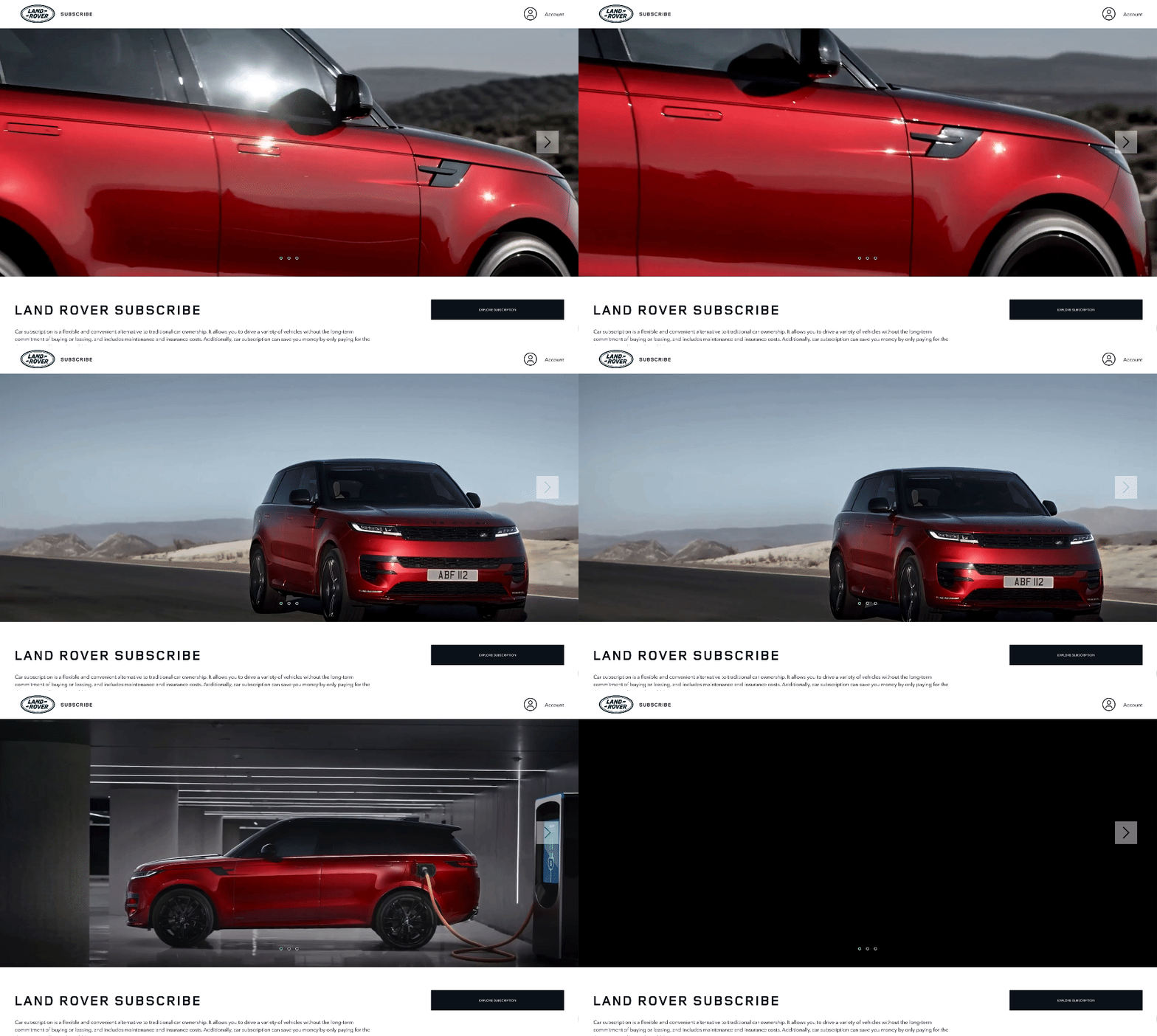
Launched SIXT's first white-label car subscription — and built the token system that made every future one faster
2023
SIXT+ white labelling project
SIXT wanted to sell luxury car subscriptions under partner brands like Land Rover, but its design system couldn't support a second brand's fonts, colours, or tone. I led the design of the Land Rover white-label experience and re-architected the design system into a token-based model so future partners could be onboarded without rebuilding from scratch.


WHAT I PERSONALLY OWNED
On a cross-company team, here's what was mine to drive:

The problem
SIXT+ ran on a single-tier design system: one set of colours, one font scale, one brand. White labelling broke that assumption. Land Rover needed its own typography (lighter weights for Range Rover, bolder for Defender), its own colour language, and a premium tone distinct from SIXT — yet the build had to ship in under six months and not fork the codebase for every future partner.
THE KEY DECISION: TOKENS, NOT OVERRIDES
The fast, tempting path was to duplicate SIXT's design files and hand-edit colours and fonts for Land Rover. I argued against it — that approach would force a full manual rebuild for every future partner. Instead I moved the system to semantic design tokens.
WHY SEMANTIC TOKENS OVER A SINGLE - TIER PALETTE
A single-tier system names colours by value ("blue-500"). A semantic system names them by job ("surface-primary", "action-accent"). Swapping a brand then means swapping token values, not redrawing screens. This turned a multi-week rebrand into a configuration change.
HOW DID I HANDLE 2 CLASHING BRAND TONE?
I audited both brands' guidelines and mapped shared structural patterns, then split tokens into four layers — colour, font, brand, and component — so Land Rover's identity could ride on top of SIXT's proven UX skeleton without weakening either.

Elements comparison

With a semantic token framework for color customization.

Font mapping for SIXT & Land Rover

Brand mapping for SIXT & Land Rover

Component tokens - SIXT & Land Rover
The Design Approach
For acquisition, I designed a "House of Brands" entry experience — a digital showroom that communicates each model's identity before the user commits, with warmer tones for Range Rover and cooler tones for Defender to signal comfort versus premium adventure. Users could enter the subscription funnel from either the Land Rover or the SIXT website, with consistent branding across both paths.
WORKING ACROSS A 3-COMPANY, 2-COUNTRY TEAM
SIXT+, JLR's marketing team, and Accenture's designers all had a stake. I ran two structured workshops to align on business requirements early and pull engineering in before handoff — catching backend constraints that would otherwise have forced expensive rollbacks late in the build.
WORKSHOP 1: BUSINESS CLARIFICATION AND EXPECTATION FROM BOTH SIDES

Workshop 1 - Understand Business

ENGAGE
How customers engage with brand, product & service?
How customers will reach us?
AQUIRE
CONVERT
How we design for conversion?
SERVE
How we serve customers for the entire duration of subscription?

CARE
How we care for users when they need help?

GO BEYOND!
How can we turn customers to fans?
SIXT+ customer journey
WORKSHOP 2: INTERNAL ALIGNMENT WITH PM AND DEVELOPMENT TEAM
I prioritized cross-team collaboration at each step of the process, helping identify issues early and minimize the need for expensive rollbacks.
This alignment allowed us to discuss expectations, anticipate challenges related to the backend (which also affected designs), prepare the platform for future white-labelling, optimize existing designs, and establish effective communication and design system buffers within the backend workflow.


Example of (left) login followed by SIXT+ and (Right) login followed by SIXT platform
SIXT+ Designs to be aligned as per Design system.
(Left) List of interaction/design not aligned with SIXT design system.
(Right) Designs aligned with design system and followed by other sub brands
Outcome
-
Shipped SIXT's first white-label subscription in 4 months against a 6-month target.
-
Land Rover bookings rose 33% within 28 days, with strong uptake of home-delivery options.
-
The token system resolved long-standing UI inconsistencies across SIXT+ and became the foundation for onboarding further luxury partners then in discussion.
White labelled Designs
To improve the acquisition experience, it's crucial that entry points for both parties align. Introducing white labeling emphasizes the need for users to grasp the brand visually, understanding the luxury and premium quality of different models.
Imagine a physical showroom where users walk in and immediately absorb the brand's aesthetic, visuals, and vibe—a concept like a "House of Brands." Here, agents showcase various model styles, allowing users to make informed decisions based on summaries, like a "Model Boutique."
The "House of Brands" visually tells the brand story, articulates the brand voice, and highlights subscription benefits. Meanwhile, the "Model Boutique" uses warmer tones for Range Rover, conveying coziness, and cooler tones for Defender, representing a premium adventure. This strategy ensures a cohesive visual narrative for the overall brand and individual models.


Range Rover boutique
House of brands
Defender boutique
Space for soon to introduce promotions
White labelled Web & MWeb screens for subscription confirmation


ENTERING LAND ROVER SUBSCRIPTION FUNNEL FROM LAND ROVER WEBSITE

Entry point from Land Rover website - Subscription and rental section
ENTERING LAND ROVER SUBSCRIPTION FUNNEL FROM SIXT WEBSITE

Entry point for Range Rover subscription
Entry point for Defender subscription
Entry point from SIXT website - Discover vehicles
What made this work?
Two decisions carried the result. Moving to semantic tokens instead of duplicating files turned every future rebrand from a multi-week rebuild into a configuration change — which is why the system later became the foundation for onboarding further luxury partners. And pulling engineering into the requirements workshops early caught backend constraints before they became expensive late-stage rollbacks. Next time I'd instrument the funnel with event tracking from day one, so I can attribute a lift like the 33% to specific decisions rather than the redesign as a whole — it's how I now scope measurement on every project.